When the opportunity arises to join a tour to the Ausangate mountain, a unique feeling always appears: it is the moment to experience something deeper.
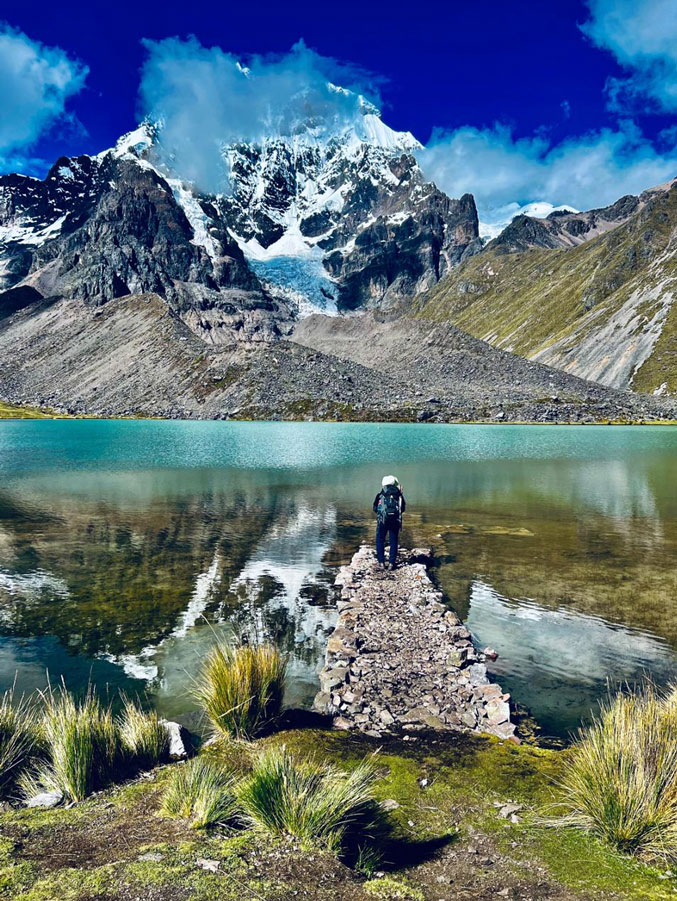
The Ausangate Trek in Peru, in the Cusco region, is not simply a high altitude hike. It is an experience that attracts travelers who love silence, snow capped peaks, and the chance to step away from the noise of the modern world.
For those who guide this route, each departure is different. It is not only about explaining landscapes or historical facts, but about accompanying personal processes. As the days pass, it becomes clear how a mountain can influence people’s emotional state. The altitude, the effort, and the immensity awaken sensitivity. Sometimes deep silences emerge; other times, contained emotions find space to be released.
In those moments, the role of the guide goes far beyond technical knowledge. It requires patience, understanding, and shared strength. Even when the mountain becomes challenging, the presence of an experienced guide brings calm and confidence. That sense of reassurance allows travelers to keep moving forward.
Is the Ausangate Trek difficult?
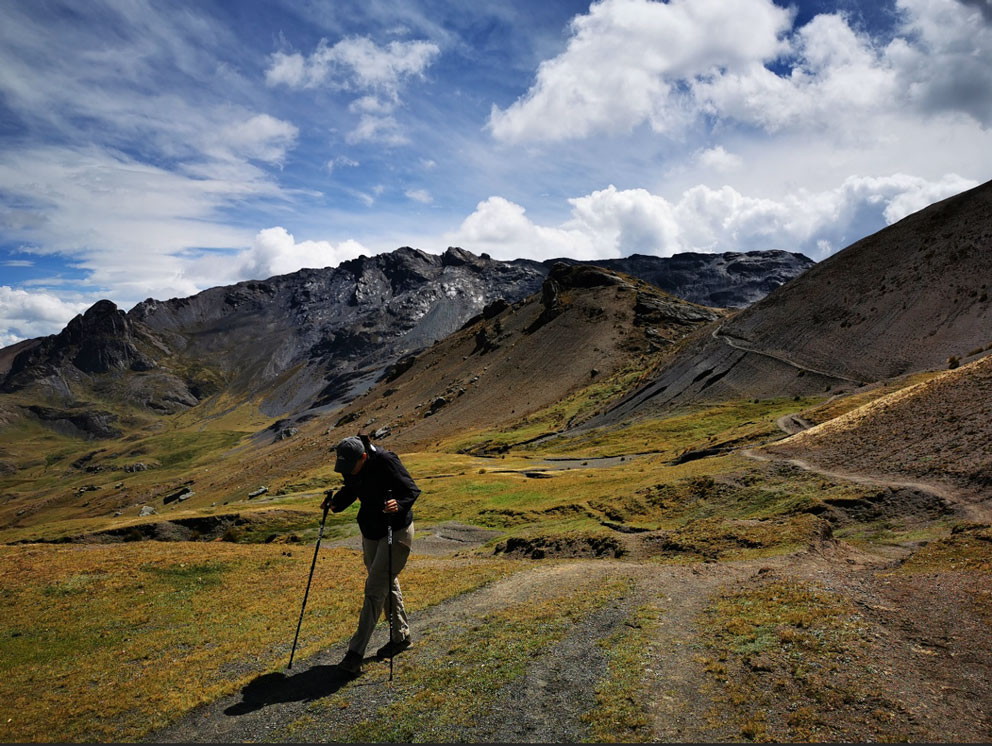
The Ausangate Trek is not technically extreme, but the altitude demands respect. For many travelers, the real challenge is not the terrain, but the effects of high altitude.
For this reason, every Ausangate trek begins with something essential: proper acclimatization.
Before starting the trek, it is recommended to spend two to three days in Cusco, taking part in cultural activities and gentle walks so the body can gradually adapt to the altitude. Proper hydration, light meals, and adequate rest are essential during this stage.
Listening to your own body is essential. The mountains teach you about limits, and the least wise thing to do is to push them without first understanding them.
In the Andes, walking through these mountains also means understanding the deep respect that local communities have held for them for generations.
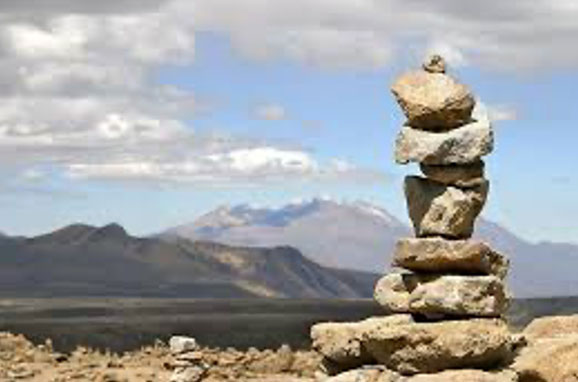
In different points along the trail, it is possible to find apachetas, small piles of stones placed by travelers and local people as a gesture of gratitude and respect for the mountain. Each stone represents a step, a wish, or an intention left along the journey.
Many travelers also carry coca leaves, an ancestral tradition in Andean culture. With three leaves they form a kintu, a small offering that is held between the hands before being placed on the earth as a sign of gratitude and protection during the journey.
For some travelers, it is simply a cultural curiosity. For others, it becomes a quiet moment of pause and reflection in the middle of the journey.
What truly matters is not the ritual itself, but the respect for a different way of understanding the relationship between humans and the mountain.

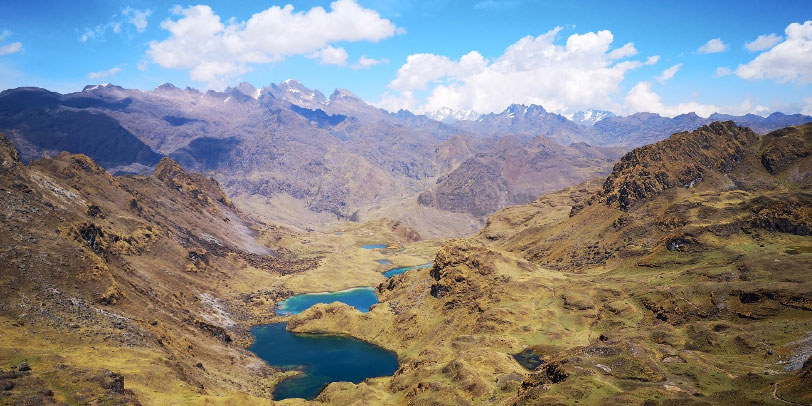
After understanding the deep respect that Andean communities hold for the mountains, the journey around Ausangate begins. The trek unfolds over several days through turquoise lagoons, high mountain passes, and remote Andean landscapes.
Day 1 – Acclimatization and the first encounter with the mountain
After the acclimatization period in Cusco, the journey continues by vehicle for approximately three hours to the starting point of the Ausangate Trek. The route passes through traditional Andean communities and landscapes that hint at the grandeur of Ausangate, visible in the distance as an imposing presence.
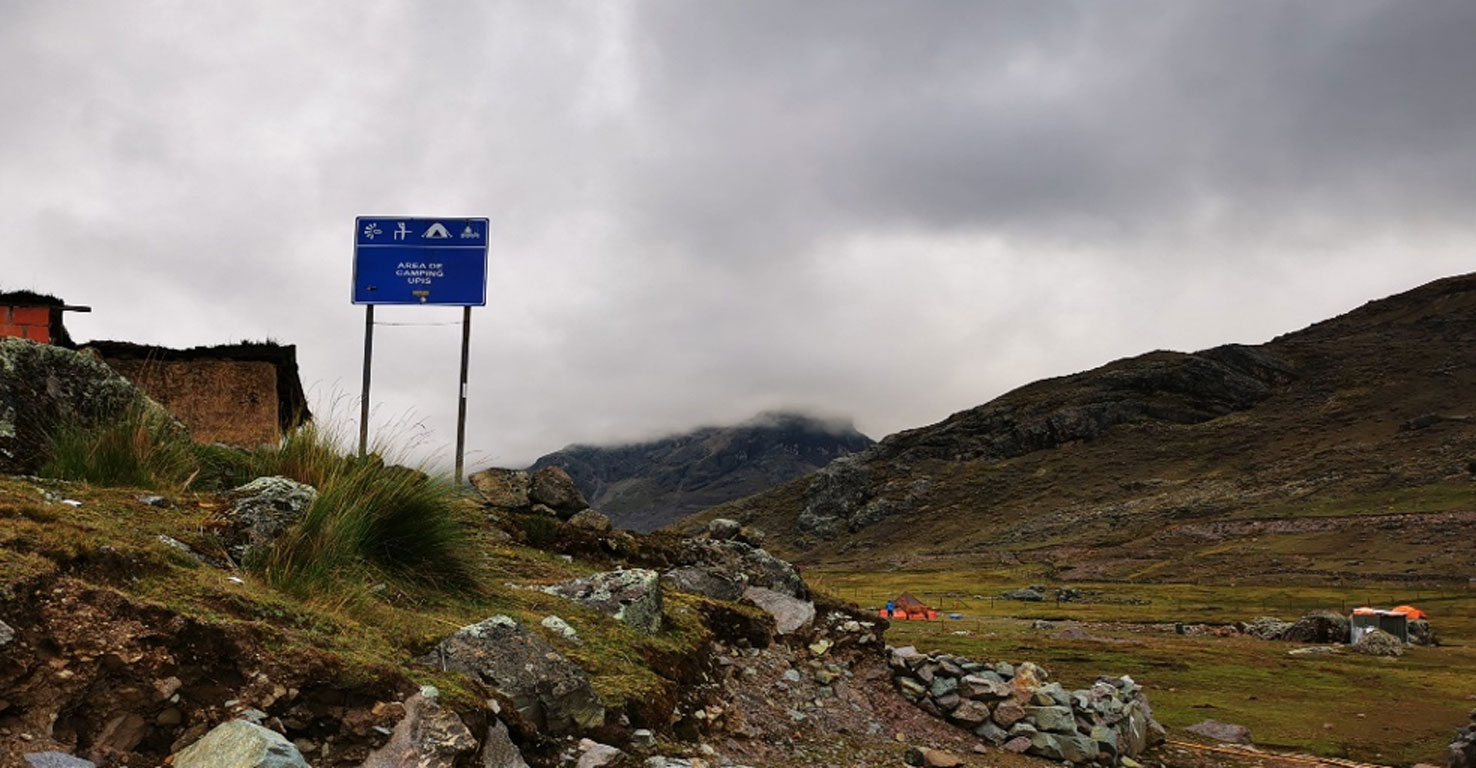
After lunch prepared by the trekking team, the first day of hiking begins: about 8 kilometers of walking until reaching 4,443 meters above sea level, where the first campsite is set up.
The surroundings combine the green landscapes of the Andes with the fresh air of high altitude. It is the first true contact with the mountain.
Day 2 – The first high mountain pass
The day begins early in order to move at a steady pace. The cold of the morning feels more intense at this altitude, making gloves and warm hats essential.
On this day, hikers reach one of the first major mountain passes, at nearly 4,800 meters above sea level, covering approximately 18 kilometers. Each turn of the trail reveals new views of glaciers, turquoise lagoons, and vast open landscapes that seem to stretch endlessly.
The campsite is set up at around 4,670 meters above sea level. By this point, the body begins to understand the rhythm of the mountain.
Day 3 – The highest point of the trek
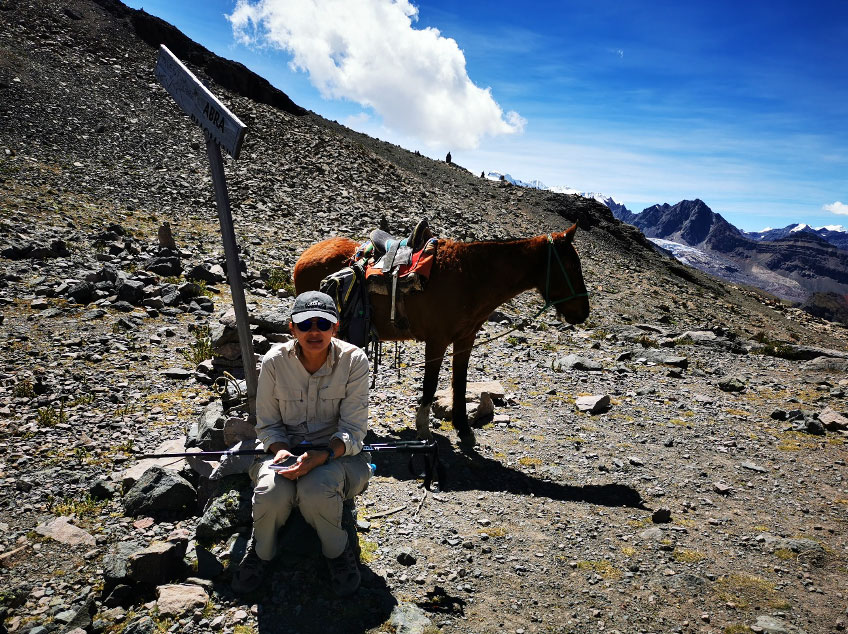
The third day brings one of the greatest challenges of the trek: crossing the Abra Palomino pass, which rises above 5,200 meters above sea level. The route covers approximately 14 kilometers.
At this altitude, the effects of the elevation can be felt more strongly, but the landscape rewards every effort. Local muleteers accompany the journey with horses available if needed, while the cooking team moves ahead to prepare lunch at the next campsite, located at around 4,600 meters above sea level.
Here, the silence becomes deeper. The vastness of the landscape invites travelers to pause, even if only for a moment.
Day 4 – Walking along the sacred Apu
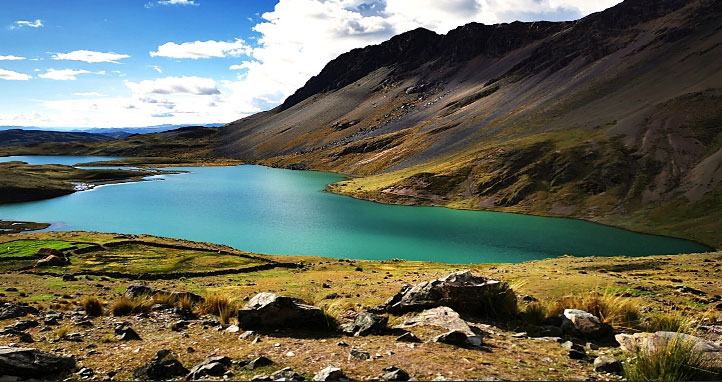
With the body now acclimatized, the route crosses another high pass near 5,100 meters above sea level. The trail continues along the slopes of Ausangate, considered a sacred Apu in Andean tradition.
The final campsite is set beside a high altitude lagoon. It becomes a place of farewell. After several days of trekking, the mountain stops being just a landscape and becomes an inner experience.
Day 5 – Return to Cusco
The final day marks the return. The body feels tired and challenged, yet there is a different feeling. It is not only about completing a four or five day trek in the Andes. Something changes.
Many travelers return feeling renewed. The mountain is not something to conquer; it is something to journey through. And along that path, it leaves lasting lessons.
More than a trek in Cusco
The Ausangate Trek in Peru combines high altitude, raw natural landscapes, and deep cultural meaning. It is a physical challenge, but also an emotional experience.
For those who guide this journey, every group is different. Each trek brings new stories, different questions, and moments that never repeat themselves. Watching someone adapt to the altitude, face their limits, and discover an inner strength is a reminder of why this route remains so special.
Ausangate does not only elevate the body.
It also elevates awareness.
And when the journey comes to an end, both the traveler and the guide understand that the mountain always leaves you with more than you expected to find.