Trekking in Peru · Planning and practical guide
By Across The Limit · Practical planning guide
You have decided you want to do the Ausangate Trek. Now comes the part most articles skip: the real logistics, the honest difficulty, what it actually costs, and what goes wrong for travelers who do not prepare properly.
This is not an inspirational guide. It is a planning guide. By the end of it you will know whether you are ready for the Ausangate Trek, what it will cost, and exactly what to expect from the experience.
How difficult is the Ausangate Trek — the honest version
Officially rated: difficult. But that label gets applied to half the treks in Peru, so let us be specific about what difficulty actually means here.
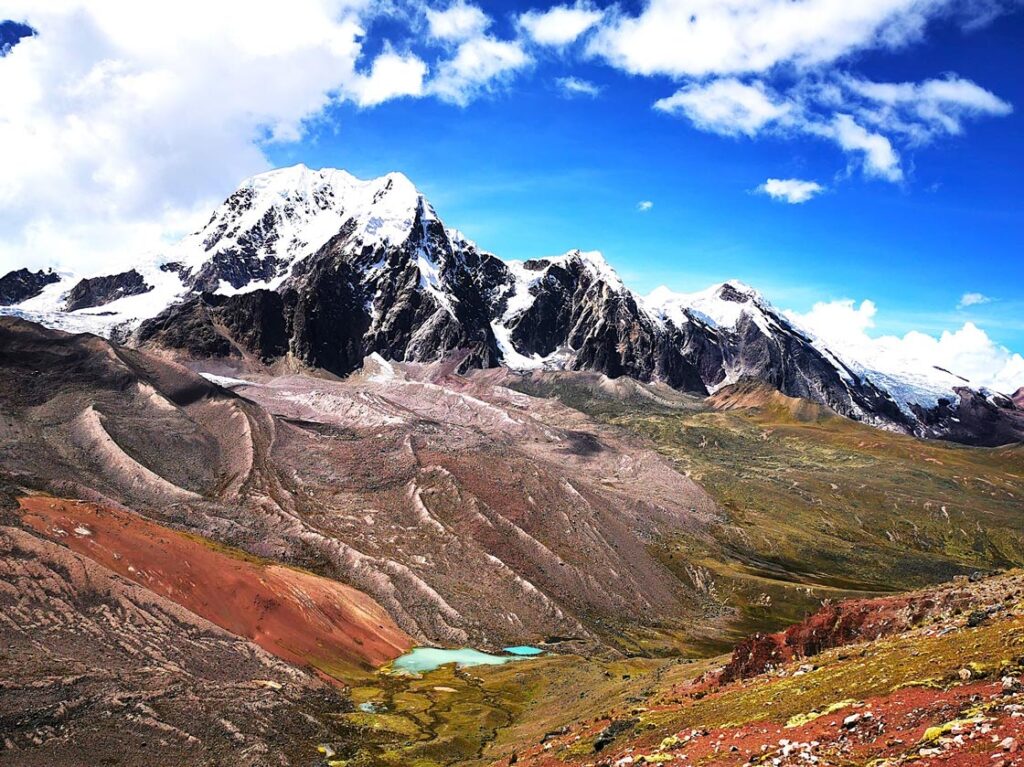
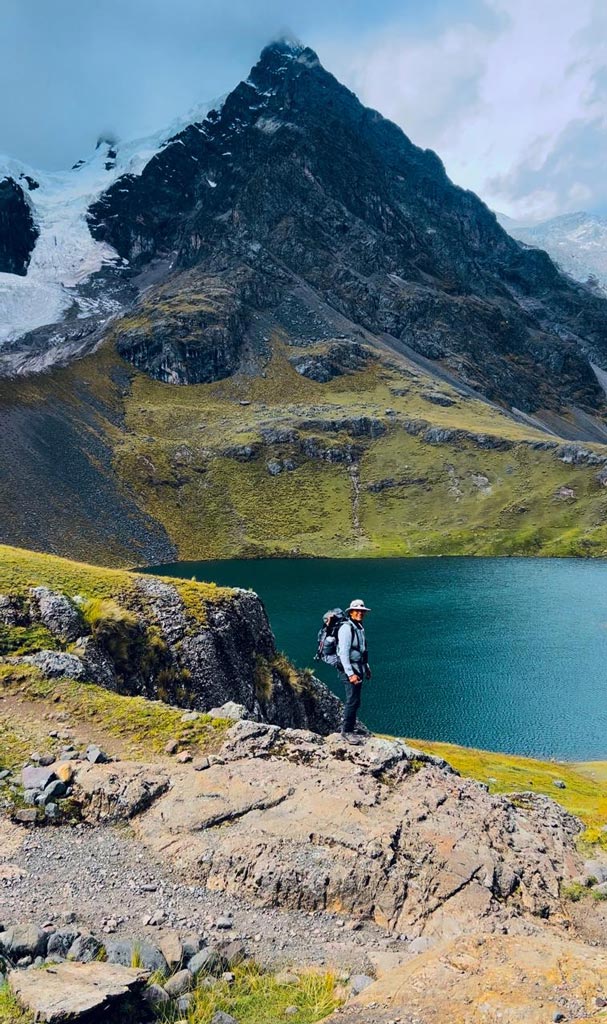
The key point our guide makes is this: the hardest part of Ausangate is not how steep or demanding the trail is. It is the altitude at which you walk. From day one through almost the last day, you are moving between 3,800m and 5,200m above sea level. For most people, acclimatization to that height is what makes the trek genuinely hard. Not the distance, not the gradient.
That said, the physical demands are real. You are walking 12 to 18km per day, gaining and losing 600 to 1,000 meters of elevation each day. Slope inclination reaches 45 to 60 degrees in sections, with the majority of the trail sitting below 45 degrees. Trekking poles are functional equipment on this route, not optional accessories.
Day-by-day altitude profile
Day 1: Tinki (3,800m) to first camp around 4,200m
Day 2: Camp to Abra Arapa (approx. 4,900m) to camp around 4,500m
Day 3: Camp to Abra Palomani (approx. 5,200m) to camp around 4,400m
Day 4: Camp to Abra Jampa (approx. 5,000m) to camp around 4,300m
Day 5: Final pass and descent to Upis or Tinki
Most common planning mistake
Flying into Cusco and attempting Ausangate two or three days later. Spend a minimum of 3 to 4 nights in Cusco at 3,400m before starting. Your body needs consecutive nights at altitude to begin adjusting. One night is not enough.
What the guide does at altitude
An experienced local guide on this route is not just navigation. They carry specific techniques for high-altitude walking that help the body manage the ascent. They adjust the group pace based on how each person is responding. They read the signs of altitude sickness before they become dangerous. And they carry supplemental oxygen for exactly the moments when it is needed.
The mistake that puts people at real risk
Of all the errors travelers make on Ausangate, this is the one our guide considers most serious: people feel symptoms they cannot control, and they hide them. They do not report headaches, nausea, or dizziness to the guide because they are afraid the tour will have to turn back.
This is understandable. You have traveled far, you have invested in the experience, and the last thing you want is to descend on day two. But hiding altitude symptoms is genuinely dangerous at 4,500m, and it is the opposite of what actually works. The guide's job is to manage altitude problems before they become emergencies. They can only do that with honest communication.
Our guide is direct about this: transparent communication is the most intelligent thing you can have on this trek, and the way to avoid any serious incident. If something does not feel right, say it immediately.
Tell your guide immediately if you feel
Persistent headache beyond day one, nausea that does not pass, dizziness, loss of coordination, or difficulty breathing at rest. Mild symptoms in the first 48 hours are normal. These are not.
What the Ausangate Trek actually costs
$3,500 to $3,800 USD
Per couple · 5 days / 4 nights · Full private service, all included
- Private certified mountain guide, English-speaking, 10 or more years on this specific route
- Full cook and kitchen crew with fresh food carried from Cusco
- Horses and horsemen for all equipment and personal bags
- Dome tents, sleeping mats, dining tent, private toilet tent
- Emergency supplemental oxygen on trail at all times
- Private transport Cusco to Tinki and return
- Full acclimatization planning and pre-trek briefing
- No shared groups — this is your trek only
Price varies based on several factors: the number of people in the group, the level of service and food quality requested, specific dates, and whether Ausangate is part of a wider Peru itinerary that includes Machu Picchu, Rainbow Mountain, or the Sacred Valley. Solo travelers pay more per person; groups of three or four reduce the individual cost. The final price reflects what you actually need, not a fixed package.
Why private service matters here
At high altitude with emergency oxygen on the trail, you need a guide whose full attention is on your group at all times. This is not the trek to do as part of a shared group departure with strangers from four different countries.
Other common mistakes to avoid
Wearing new boots on the trail. Blisters at 4,500m with no pharmacy nearby are a genuine problem. Break in footwear months in advance.
Bringing the wrong clothing for overnight temperatures. Nights at camp reach -5°C to -10°C. A sleeping bag rated to -10°C is the floor. Down layers are not optional.
Using regular socks instead of trekking-specific ones. The right socks prevent blisters and keep feet warm. This sounds minor until you are on day three with cold wet feet.
Packing too much in the daypack. Horses carry your main bag, but whatever you carry during 8 hours at altitude should be as light as possible. Weigh it in Cusco before you leave.
Trying to push the pace on the high passes. Slow and steady above 5,000m is a physiological requirement. Forcing the pace at altitude is how people end up needing to turn back early.
Safety, guides, and logistics: what is actually in place
Safety protocol
Emergency oxygen on trail at all times. Evacuation routes planned for every stage before departure. Guides trained in wilderness first aid.
Altitude management
Full written acclimatization plan provided before the trek begins, adjusted to your arrival city and personal health history.
Guide profile
Local Cusco-region guides, certified mountain guides with 10 or more years specifically on the Ausangate circuit. English-speaking.
Logistics
Airport transfers, pre-trek briefing, all permits, food, and equipment handled. You focus on the walk. We handle everything else.
Ready to plan your Ausangate Trek?
We would rather talk with you before you book than take a reservation blind. Every traveler has different fitness levels, altitude history, and travel dates, and all of that shapes how we design your route and acclimatization plan. Tell us your dates.
Frequently asked questions
Is Ausangate harder than the Inca Trail?
In most respects, yes. The Inca Trail reaches 4,215m at its highest point and is a path designed by ancient cultures, with approximately 70 percent of its surface paved with stone steps and stone-laid sections. That is precisely what makes it physically demanding. The Ausangate trail, by contrast, follows muleteers paths: unpaved, without steps or stone grading, which gives it a completely different character underfoot. Ausangate also spends four consecutive nights above 4,300m and crosses passes above 5,000m. The Inca Trail is regulated and has infrastructure at its campsites. Ausangate is more remote, more physically exposed, and significantly more demanding in terms of altitude management over multiple consecutive days.
Do I need prior trekking experience?
Yes. Multi-day hiking experience is required, ideally at altitude. If you are uncertain about your fitness level, we recommend a preparatory acclimatization hike in the Sacred Valley before committing to Ausangate. We can organize that as part of your overall Peru itinerary.
Can I do it without a guide?
Technically yes, there is no permit system like the Inca Trail. Practically, we strongly advise against it. There is no trail signage, no rescue infrastructure, no cell signal, and no way to call for help if altitude sickness becomes serious. At 5,200m, conditions change fast. A certified local guide is a safety mechanism, not a convenience.
What fitness level do I need?
You should be able to hike 5 to 6 hours per day carrying a light daypack of 4 to 6kg over uneven terrain. Regular cardio for at least 2 to 3 months before the trek is the baseline. Arriving in Cusco fit and rested makes a significant difference to how your body handles the altitude from day one.