Trekking in Peru · Experience and inspiration
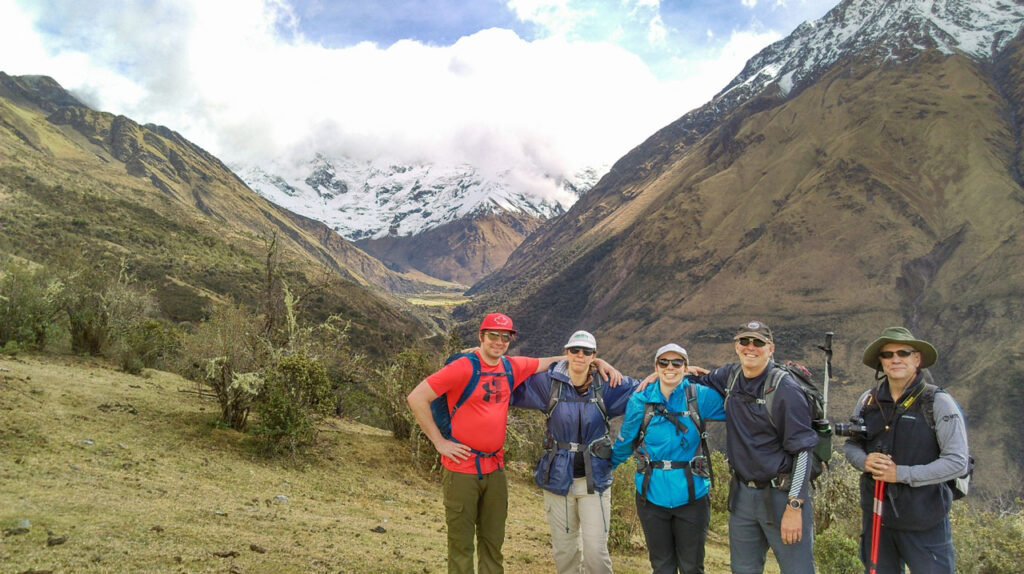
Some travelers arrive in Peru and follow the well-marked path to Machu Picchu. Others start asking a different question: what is beyond that?
The Ausangate Trek is where that question leads. It is a five-day circuit around Nevado Ausangate, a 6,384-meter glaciated peak that the Incas considered one of the most powerful mountain deities in the region. The route passes through high mountain passes, lagoons of impossible colors, and stretches of altiplano where the only sound is wind and the occasional bell of a llama herd passing in the distance. There are no crowds here, no checkpoints, and no tour buses at the trailhead.
This is a guide for people who are seriously considering the Ausangate Trek Peru and want to know what it actually feels like to be there.
What makes Ausangate different from every other trek
The simplest way to explain it: Ausangate is a route for people who are looking for solitude, silence, and a real connection with nature. That is not marketing language. On most popular trails in Peru you walk with noise around you all day. On Ausangate you can go hours without seeing anyone. The mountain is just there, in front of you, permanent and indifferent, and everything else falls away.
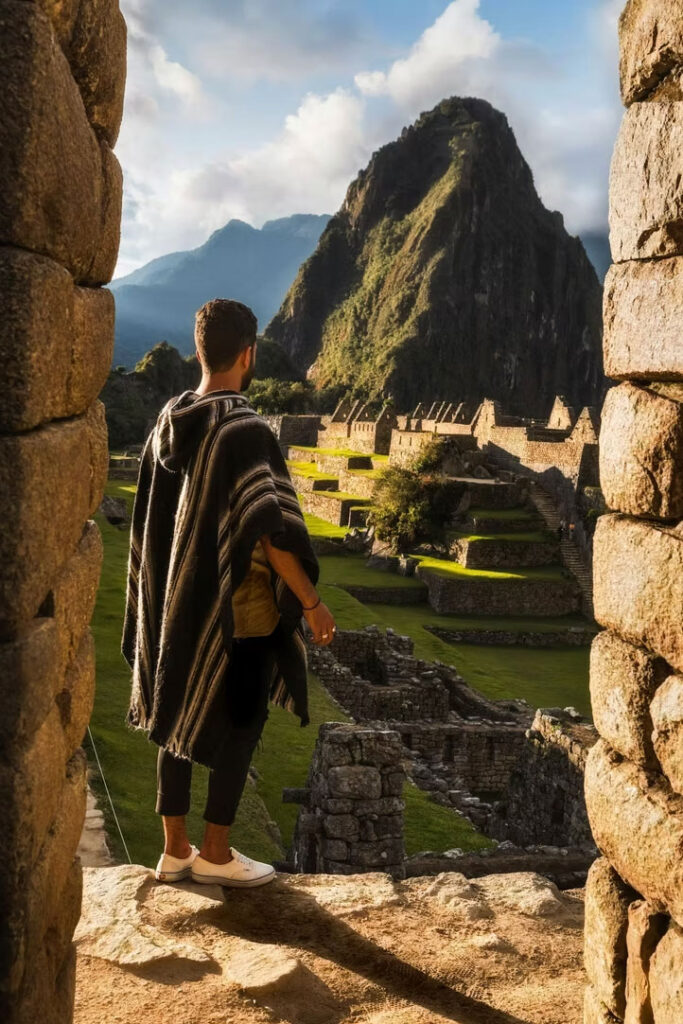
The Inca Trail is a great experience. It ends at Machu Picchu, it has historical weight, and it is deservedly famous. But it also has strict quotas, shared campsites, and a trail that feels organized. Ausangate is not organized. The landscape has not been shaped for visitors. The route takes you through it as it is, and that makes a considerable difference.
Max altitude
5,200m
17,060 ft
Duration
5 days
4 nights camping
High passes
4 to 5
All above 4,800m
Start point
Tinki
3,800m / 12,500 ft
Who this trek is really for
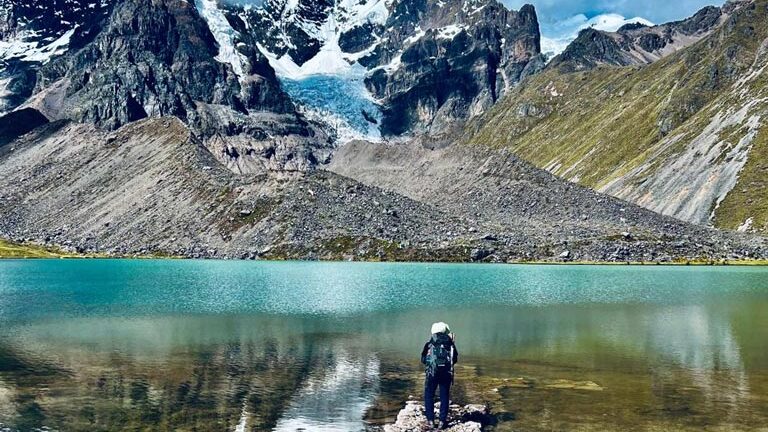
Ausangate draws a specific kind of traveler. Hikers who want a genuine physical challenge. People who camp regularly or want to try it in a setting that justifies every bit of discomfort. Landscape photographers chasing the quality of light you only get at this altitude. Those with an interest in high-altitude geology who want to understand what they are walking through and not just look at it.
It also draws people who are looking for something harder to name: a disconnection from the noise of daily life, a few days of real silence, the kind of space that allows a different kind of thinking. Our guide describes this group as people with a certain philosophy of spirituality or introspection. Whatever you call it, Ausangate delivers that quality in a way that very few places on earth still do.
Ausangate is right for you if:
- You have multi-day trekking experience and know honestly how your body handles altitude
- You are comfortable sleeping in a tent when temperatures drop to -5°C or lower at night
- You are drawn to landscapes that have not been designed for tourists
- You are a landscape or wildlife photographer
- You want several consecutive days without a phone, news, or noise
- You are looking for something that will stay with you long after the trip ends
Think carefully if:
- You have never done overnight trekking
- You have a history of serious altitude sickness
- You plan to combine this with Machu Picchu in the same week without real acclimatization days
The moments you will not forget
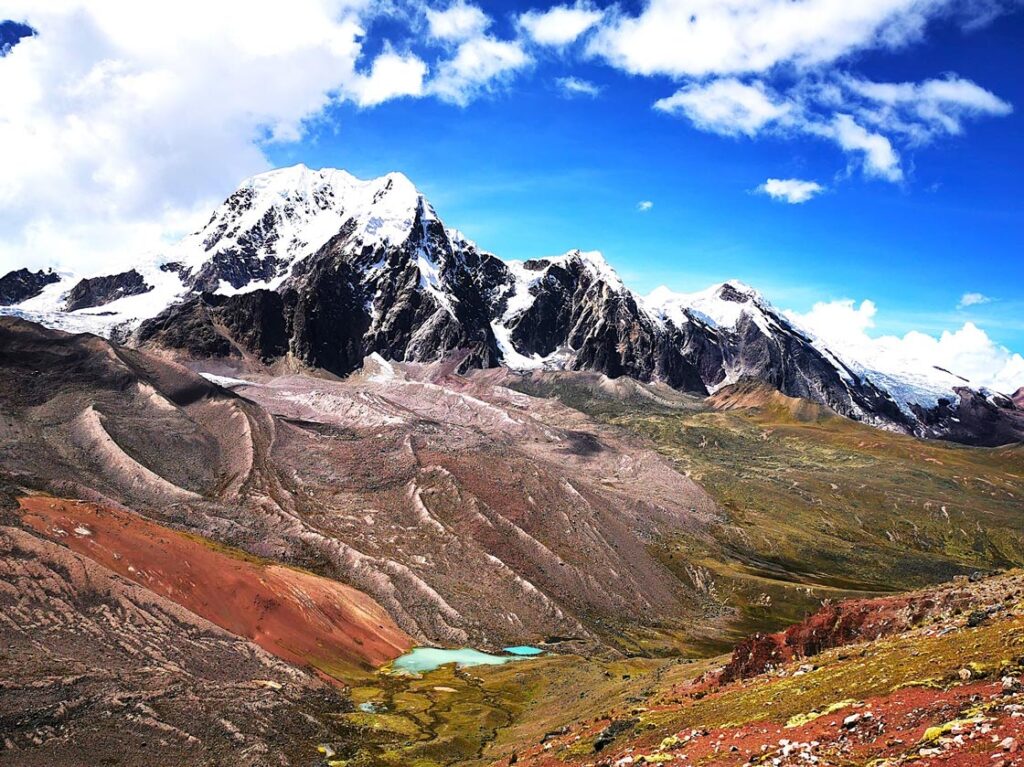
Every time you stop to rest on the Ausangate circuit, something happens that is difficult to describe. You lift your gaze and the landscape is vast in a way that does not feel real. The mountain is right there, dominant, glaciated, silent. The Andean light at this altitude has a clarity you do not find at sea level. Words fall short, and on this route that is not a cliché. It is something our guide says every time, and it holds.
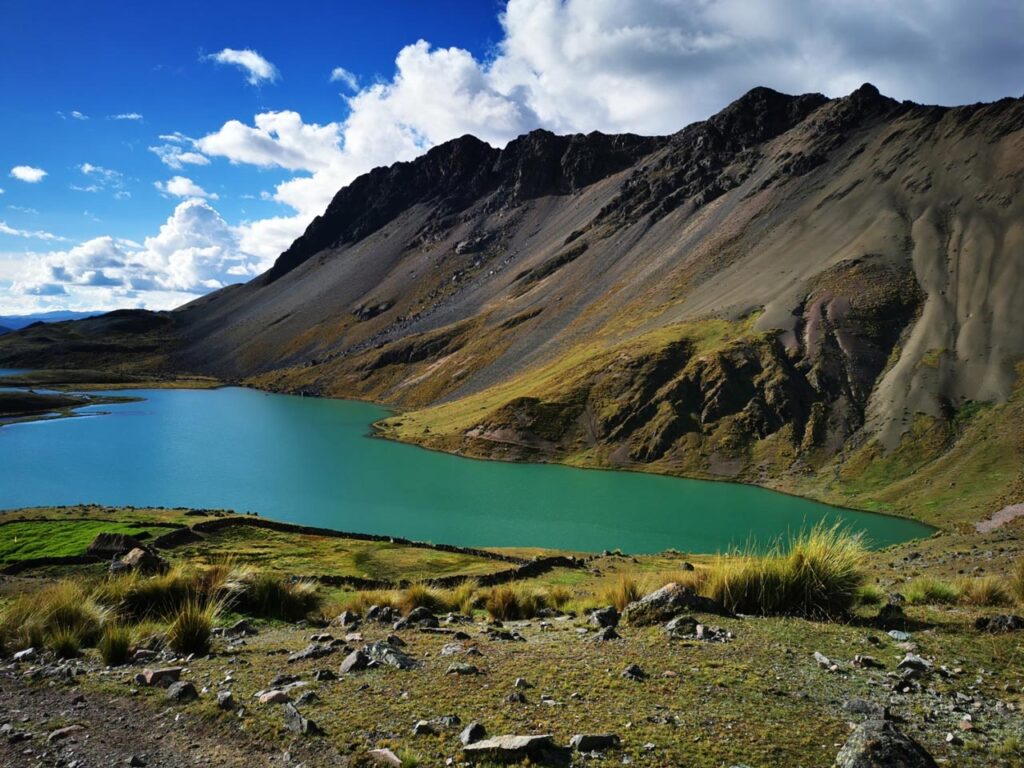
The lagoons are their own category. The minerals in the glacial meltwater produce colors that shift through the day: deep turquoise, rust-orange, pale green, depending on the hour and angle of the sun. You stop at them not because the itinerary says to, but because it is physically difficult to keep walking past them.
The wildlife here is not fenced or organized. Vicuñas appear at a distance, grazing quietly across the altiplano. Llamas and alpacas move through camp. Birds gather at the smaller lagoons. If you happen to be at a high camp on a clear night, the sky becomes something else entirely. Not every night is clear at this altitude, but when one is, it tends to be the thing people mention first when they talk about the trek afterward.
"Every time someone stops and looks up, the landscape is so vast that words cannot express what it is. Only the silence and the delight of nature."
Our guide, on what Ausangate does to people.
For photographers
The early morning light on the glacier flanks is exceptional. Plan your highest-altitude camps around the key viewpoints and ask your guide specifically about timing for the lagoon shots. This is knowledge that only comes from years on this route.
Is the Ausangate Trek worth it
Yes. With a condition: you have to be genuinely prepared for it.
The travelers who come back from Ausangate and talk about it for years are not necessarily the ones who had the easiest time. They are often the ones who struggled on day two, found their pace by day three, and by the final descent understood something about themselves and about this landscape that they could not have accessed any other way.
If you have been dreaming about Peru for years, Machu Picchu is the obvious answer. Ausangate is what happens when the dream goes deeper. It asks more of you, and it returns more in kind.
Thinking about this trek?
We design every Ausangate itinerary around the specific traveler: your fitness level, altitude history, travel dates, and what you are looking for from the experience. Tell us where you are starting from.
Frequently asked questions
Is Ausangate better than the Inca Trail?
They serve different purposes. The Inca Trail has historical significance and leads to Machu Picchu. Ausangate has no ruins and no famous endpoint in the traditional sense. It has its own destination: a personal one, toward the geography of the soul in our interior. As you raise your body into the heights, the spirit detaches from the noise of the valleys and enters the sacred silence of the mountains. In that sense, it is a journey toward your own Machu Picchu, the one that lies within. If you want history and a concrete arrival point, the Inca Trail. If you want remote mountain trekking without crowds or infrastructure, Ausangate is an entirely different category.
Can I combine Ausangate with Machu Picchu?
Yes, and we recommend it. The order matters: Machu Picchu first at 2,400m, then real acclimatization time in Cusco, then Ausangate. Going the reverse way disrupts the acclimatization your body has been building. A well-designed Peru itinerary sequences these properly and gives you both experiences at their best.
What is the best time of year to go?
The dry season runs from May through October. June, July, and August offer the most stable conditions. May and September are excellent and slightly quieter. Avoid November through March: the wet season makes the high passes dangerous and visibility drops significantly.
What does a private guided trek include?
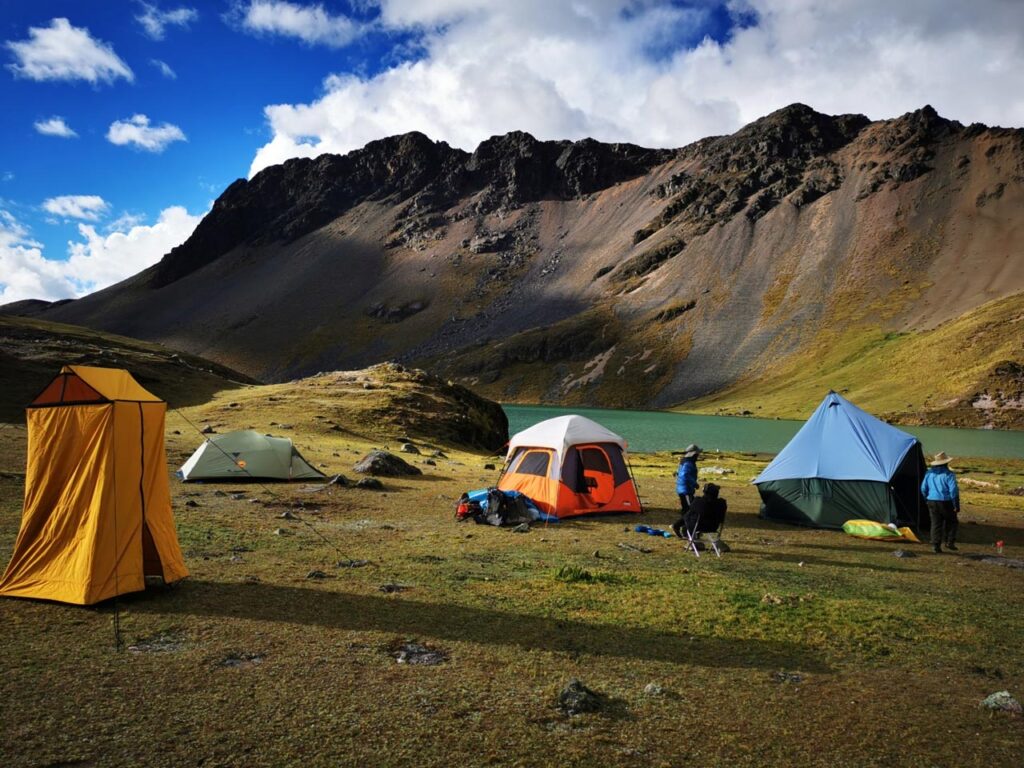
A full-service private trek includes a certified English-speaking guide, cook, kitchen crew, horses for all equipment, all meals on the trail, dome tents, sleeping mats, dining and toilet tents, emergency supplemental oxygen, and private transport from Cusco. Nothing is shared with other groups.